
A2P SMS: A FreeClimb Guide
Learn which number best supports your use case, their associated costs, and how FreeClimb can help you scale your campaigns.
SMS, or Short Message Service, is a text message sent to a mobile device over a cellular network. Many businesses use SMS to communicate directly with customers. With FreeClimb’s API, customers can dynamically send SMS messages at scale. A single SMS supports 160 characters. If Unicode characters like emoji or Chinese characters are present, a single message can support 70 characters. Modern phones and cellular networks now support message concatenation, which automatically splits messages longer than 160 characters into segments and reassembles them upon delivery. Messages are billed on a per-segment basis.
What is A2P SMS messaging?
Application-to-Person (A2P) messages are sent from an automated business application to an individual’s mobile phone. This includes marketing communications, appointment reminders, two-factor authentication, one-time passwords (OTPs), and other notifications.
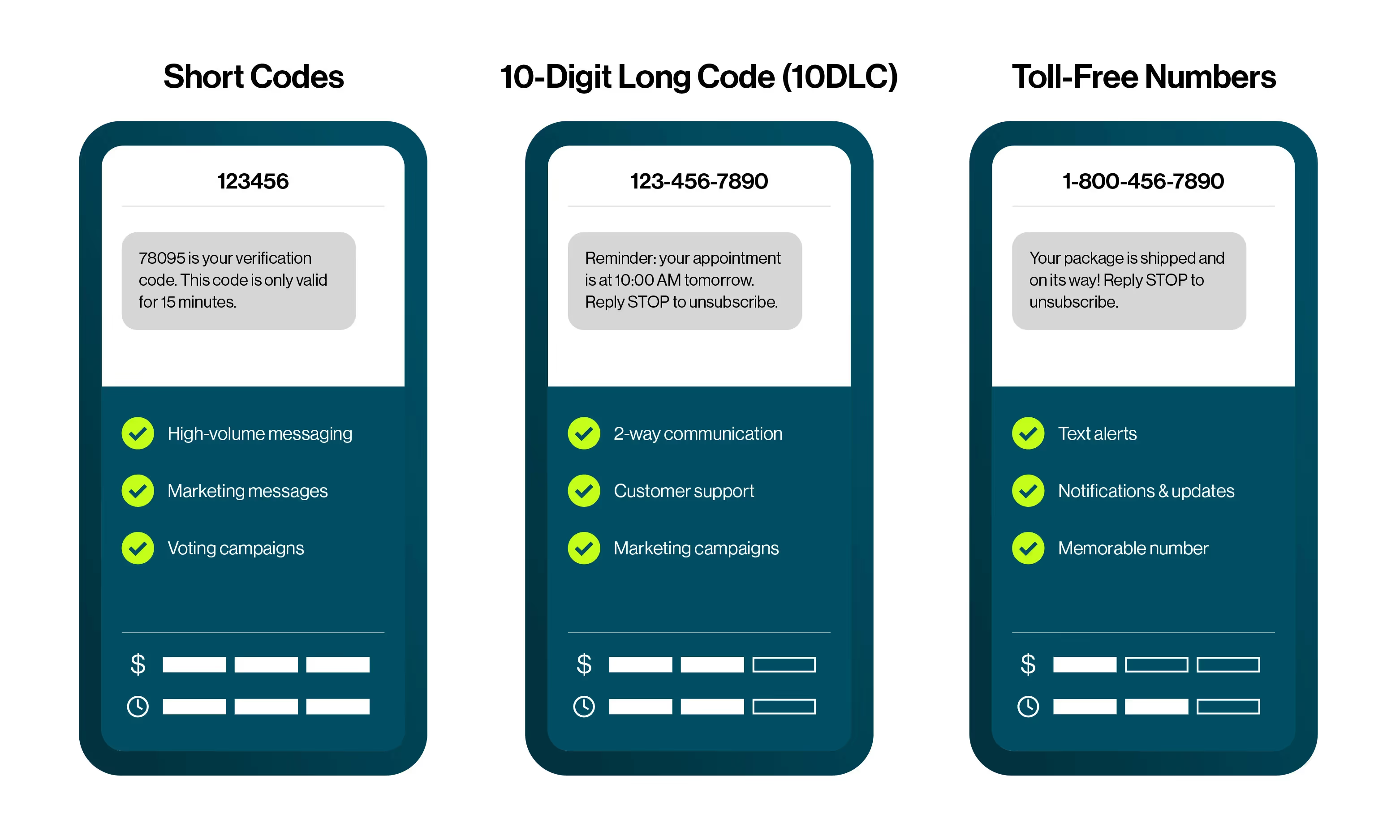
There are three main phone number types that businesses can use for A2Ptext messaging: short code, 10-digit long code (10DLC), and toll-free numbers.
Short code SMS
What are short code SMS messages?
What are short code SMS messages?
Short codes are abbreviated phone numbers, usually five or six digits instead of 10 like a regular phone number. Businesses and organizations use these short codes to send SMS messages to recipients, frequently for updates on special offers or to vote in contests. Short codes make it easy for businesses to send a high volume of messages at one time. Like standard SMS messages, short code messages are limited to 160 characters.
Short code regulation
The U.S. government regulates short codes to prevent misuse and protect customers. The Common Short Code Administration (CSCA) manages short codes, and the Cellular Telecommunications and Internet Association (CTIA) sets and maintains usage guidelines.
Short code costs
Costs associated with short codes include:
-
Short code acquisition: Depends on standard versus vanity, and also requires a setup fee
-
Monthly lease fee: Ongoing lease fees to access your short code vary based on short code type and country/region
-
Messaging costs: You may be charged for each inbound and outbound SMS sent through short code. Costs vary depending on your mobile carrier. Some short codes incur inbound charges, which may be charged per message or as part of a monthly fee
-
Compliance and regulatory fees: Depending on country or region, there may be regulatory fees or taxes imposed on short codes
Recipient U.S. Short Code Delivery U.S. mobile number located in the U.S. Yes, if its carrier has provisioned the code U.S. mobile number roaming in another country Potentially; it remains a U.S. subscriber, but roaming delivery is carrier-dependent Canadian +1mobile numberNo—Canada has a separate short-code program Mexican mobile number No UK, European, Asian or other international number No Foreign mobile subscriber roaming in the U.S. No—the phone number belongs to a foreign carrier Puerto Rico/U.S. territories Provider- and carrier-dependent; confirm explicitly with the aggregator -
Carrier fees and aggregator costs: Mobile carriers and SMS aggregators may charge for connectivity and message delivery. Fees can include message routing and delivery reports
10DLC (10-Digit Long Code) SMS
What is 10DLC?
10DLC stands for 10-Digit Long Code, which is a type of long code that is intended for commercial use, especially for business messaging and A2P communication. It is similar to short codes, but because it is a unique 10-digit phone number, it can be a local number your customers recognize.
To send A2P messages from a 10DLC number in the United States, you must register with The Campaign Registry (TCR). 10DLC numbers verified through TCR may receive a throughput of up to 4500 message segments per minute.
10DLC regulation
10DLC is regulated by the Mobile Network Operators (MNOs) via TCR in the U.S. These MNOs require businesses to register their use of 10DLCs and comply with specific guidelines that prevent spam and misuse. Regulations include:
- Opt-in and opt-out requirements: 10DLC regulations state that businesses must obtain opt-in consent from customers before sending any A2P messages. Businesses must also provide clear opt-out instructions in every message and must no longer send to customers that opt-out (send STOP).
- Registration: Businesses must register their use of 10DLC with TCR. FreeClimb helps users register their brand and campaigns; learn more about that here.
- Brand vetting: On behalf of Mobile Network Operators (MNOs), TCR reviews and verifies the information businesses provide during the registration process to ensure accuracy and compliance with anti-spam policies. FreeClimb helps users register their brands and undergo vetting.
- Message content guidelines: A2P messages sent through 10DLC must comply with specific guidelines. These include messaging frequency, accurate sender IDs, and content that is not spam, inappropriate, or fraudulent. Messages must also be compliant with other regulations, such as the Telephone Consumer Protection Act.
- Volume limits: 10DLC users are subject to message volume to prevent spam and misuse. Volume limits may vary by carrier.
- Use case requirements: There are specific use case requirements for businesses that use 10DLC. These requirements can vary by carrier.
10DLC registration costs and carrier fees
Your organization is responsible for carrier surcharges. See more about pass-through carrier A2P SMS/MMS fees.
Learn more about 10DLC
To learn more about 10DLC, we recommend our FreeClimb 10DLC Guide.
Toll-Free SMS
What are toll-free SMS messages?
Also known as toll-free texting or SMS 800, toll-free text messages are sent to and received from toll-free phone numbers in the U.S. and Canada. Toll-free numbers are usually associated with businesses or service providers, and allow customers to contact them without incurring charges for messages they send.
Organizations use toll-free SMS messages for customer support, inquiries, marketing, and service activations. Many businesses choose toll-free SMS as a cost-free way for customers to communicate with them via text message.
Toll-free numbers in the U.S. are most often designated with the following prefixes: 800, 888, 877, 866, 855, 844, or 843. In Canada, the toll-free prefixes are 800, 888, and 877.
Toll-free regulation
Toll-free SMS messaging is subject to regulation under the the Telephone Consumer Protection Act (TCPA), which sets rules for sending SMS messages and retaining consent from recipients.
Toll-free costs
Organizations that send SMS via toll-free numbers will face costs that vary based on number provider, mobile carrier, message volume, and services. Here are some of the common cost factors:
- Toll-free number rental: Renting a toll-free number requires a rental or subscription fee. The fee varies by provider and number, and fees can be monthly or annual
- Inbound message costs: The organization that owns the toll-free number is responsible for the costs of messages they send and receive. Costs vary on your mobile carrier and your agreement with the toll-free number provider
- Service provider fees: Depending on the provider, there may be additional services fees or charges for features like message routing, delivery reports, and API access
- Compliance/regulatory costs: Complying with requirements such as the TCPA may involve costs related to maintaining records of consent and ensuring compliance with messaging rules
- Integration and development costs: Depending on your use case, you may need to invest in software development, API integration, and infrastructure to support your toll-free SMS service
Short code vs 10DLC vs toll-free SMS
Short code, 10DLC, and toll-free SMS are ideal for different considerations and use cases.
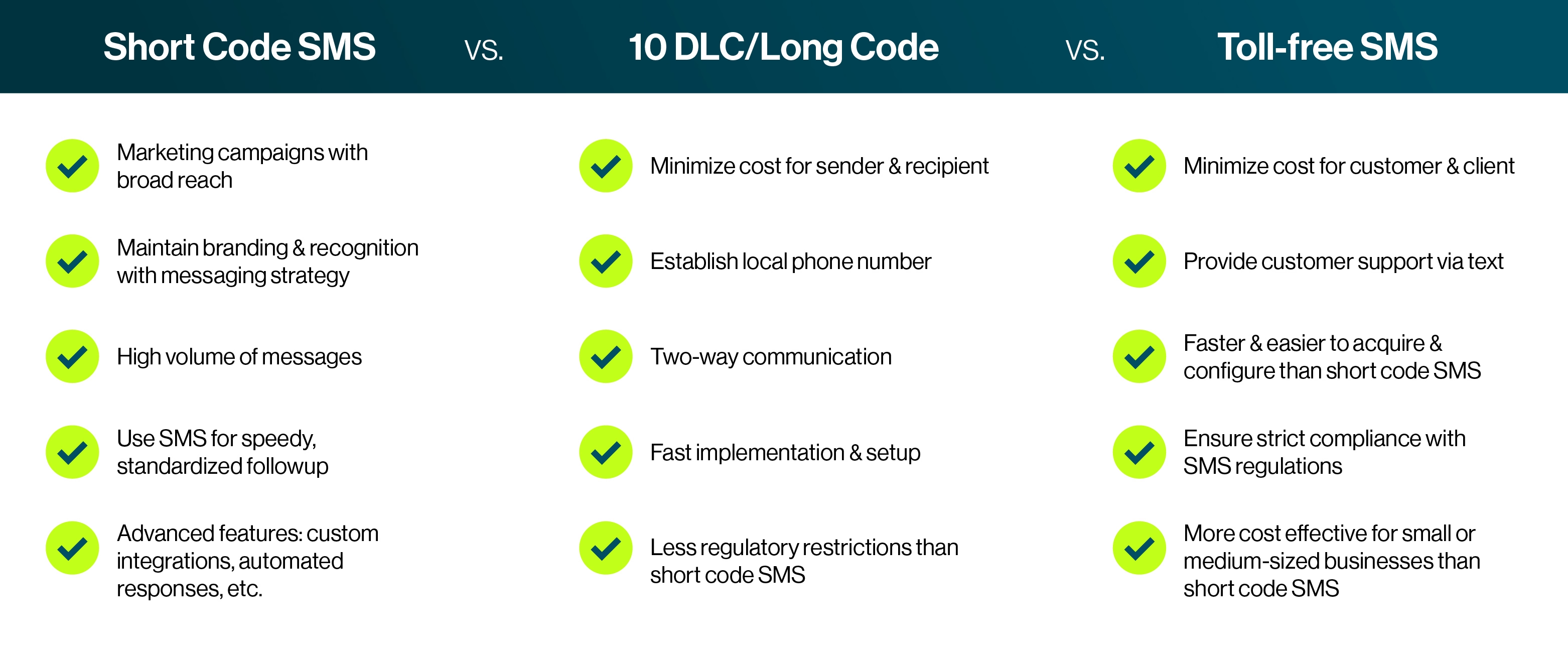
Short code is a good choice if you:
- Are running marketing campaigns, especially those with a broad reach
- Want to maintain branding and recognition within your messaging strategy
- Anticipate a high volume of messages
- Are using SMS for service activation, app downloads, and other actions that require speedy, standardized followup
- Require advanced features like custom integrations, automated responses, or interactive messaging flows.
- Short code is designed to provide the flexibility and capability needed
10DLC is a good choice if you:
- Are looking to minimize costs for both senders and recipient
- Want to establish a local presence with a local phone number
- Require faster implementation and setup
- Do not want to deal with as many regulatory restrictions as short code SMS
Learn more about the pros and cons of 10DLC.
Toll-free SMS is a good choice if you:
- Want to minimize messaging costs for your customers or clients
- Are providing customer support via text
- Want an SMS number that is faster and easier to acquire and configure than short code
- Need to ensure strict compliance with SMS regulations
- Are a small or medium-sized business and want a number that is more cost effective than short code
Updated 19 days ago